


 English
  中文
中文 
10 Reasons Why a Headlamp is the Ultimate Hands-Free Upgrade
The Cold Reality of Darkness: Why a Headlamp is Non-Negotiable
In the field, darkness isn't just an inconvenience; it's a hazard multiplier. I’ve spent two decades pulling people out of situations they thought were temporary, only to find themselves trapped by nightfall without light. A headlamp isn't a gadget you buy because a review told you it was "cool." It is a critical piece of life-support hardware. When your heart rate spikes and adrenaline dumps into your system, fine motor skills degrade. You need light that is already mounted, already on, and pointing where you look. Hands-free operation isn't a luxury feature for reading a map; it’s the difference between self-rescue and waiting for a recovery team.
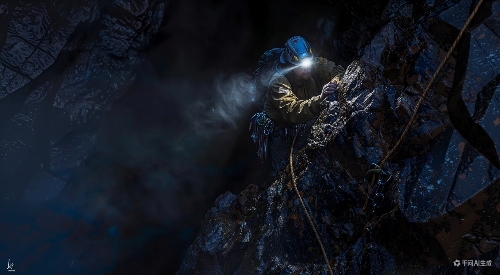
The following analysis details ten critical reasons why a headlamp belongs on your person at all times, stripped of marketing fluff and focused entirely on survival utility.
- Hands-Free Operational Capability (The Dexterity Factor)
The primary tactical advantage of a headlamp over a handheld flashlight is the liberation of the upper extremities. In a rescue scenario or technical climb, your hands are your lifeline. If you are navigating a Class 3 scramble or setting up a belay in the dark, holding a flashlight compromises your grip strength and balance.
A headlamp aligns the beam with your focal point. This allows for complex manipulation of gear—knot tying, stove operation, or splinting an injury—without the cognitive load of managing a secondary light source. Furthermore, in emergency medicine, having both hands free to apply pressure to a wound while simultaneously illuminating the injury site is not just efficient; it is vital. Do not underestimate the clumsiness induced by cold or stress; removing the variable of "holding the light" reduces error rates significantly.
- Navigation and Terrain Assessment
Night hiking requires a different visual processing speed than day hiking. Your depth perception is compromised. A quality headlamp provides a consistent flood pattern that illuminates trip hazards—roots, scree, uneven grade—well enough for your brain to process foot placement.
Unlike a handheld light, which bounces with every step and creates a strobe effect that induces nausea and disorientation, a headlamp moves with your center of gravity. This stability allows for better proprioception. Additionally, many modern units offer specific beam shapes (aspheric lenses) that cut through fog or rain better than a standard reflector, allowing you to read topography even when visibility drops.
- Search and Rescue (SAR) Signaling
When you are the one lost, a headlamp transforms into a high-visibility beacon. While a whistle is auditory, light is visual and travels faster. The "SOS" mode found on most units (three short flashes, three long, three short) is the international standard for distress.
From a SAR perspective, a flashing light on a human head is distinct from static ambient lights or stars. It draws the eye immediately. Furthermore, if you are injured and unable to wave a light, the mere act of turning your head can sweep a beam across a search team's position, alerting them to your location. Do not rely solely on your phone’s screen; it lacks the lumen output and range to be seen from a distance or through brush.
- Red Light Preservation (Night Vision)
This is a technical specification often ignored by novices until it is too late. Human eyes take approximately 30 minutes to fully adapt to darkness (scotopic vision). Once adapted, the rods in your eyes are incredibly sensitive. If you blast them with 500 lumens of white light to check a map, you instantly bleach the rhodopsin in your eyes, resetting that adaptation clock to zero.
A headlamp with a dedicated Red Light mode preserves this night vision. It allows you to perform tasks—reading a compass, checking a watch, organizing a pack—without blinding yourself or your teammates. In a group setting, using red light is a courtesy that prevents "flash blindness," ensuring the entire party remains mobile and safe.
- Psychological Stabilization
Fear is a physiological response to the unknown. In a survival situation, the imagination creates threats that are often worse than reality. Total darkness amplifies sounds and distorts spatial awareness, leading to panic. Panic leads to poor decision-making, such as moving blindly and breaking a limb.
Having a reliable light source provides a psychological anchor. It defines your immediate perimeter, pushing back the void. Being able to illuminate the contents of your pack or inspect a strange noise gives you a sense of control. Control reduces cortisol levels, keeping you calm enough to execute survival protocols rationally.
- Camp Efficiency and Logistics
Setting up camp in the dark is inevitable if you are behind schedule. Pitching a tent, filtering water, and preparing food require precision. Fumbling with tent poles or stove fuel in the pitch black increases the risk of losing small parts or, worse, spilling fuel.
A headlamp allows you to work efficiently. Look for a unit with a wide "flood" beam rather than a tight "throw." Flood beams illuminate the interior of a tent or the inside of a backpack, eliminating deep shadows where gear gets lost. Efficient camp setup means more time resting and less time exposed to the elements.
- Wildlife Deterrence and Awareness
While not a guarantee against predation, a sudden burst of high-lumen light can startle aggressive wildlife. Animals generally avoid confrontation, and a bright beam directed at their eyeshine can disrupt their approach.
More importantly, a headlamp helps you identify what is around you. Is that movement a bear, a moose, or just wind in the bushes? Identification dictates reaction. If you can see the threat, you can prepare your deterrent (bear spray) before the animal is within striking distance. Conversely, it helps you see where you step, avoiding venomous snakes or insects on the trail.
- Thermal Regulation and Battery Management
Handheld flashlights generate heat, which is wasted energy if held in a hand. However, some high-output headlamps use the battery casing as a heat sink. In freezing temperatures, lithium batteries suffer from voltage depression. Keeping the battery pack close to your head (under a hat or hood) utilizes body heat to keep the cells within their optimal operating temperature range, extending runtime when you need it most.
Furthermore, headlamps are generally more energy-efficient for prolonged use than handhelds because they are designed for lower-output, longer-duration tasks (hiking pace) rather than momentary high-output bursts.
- Weight Distribution and Ergonomics
Carrying a heavy handheld flashlight for eight hours causes forearm fatigue. A headlamp distributes the weight across your cranium. While a heavy light can cause neck strain, modern designs utilize rear battery packs to counterbalance the front weight, neutralizing the torque on your neck.
For ultralight backpackers, headlamps offer superior weight-to-light ratios. You are already carrying the weight on your head; adding 100 grams for 500 lumens is a negligible trade-off for the safety margin gained.
- The "Tenacious Z" Redundancy Principle
In the SAR community, we live by the rule of threes. One is none, two is one, three is backup. However, for lighting, a headlamp serves as the perfect companion to a handheld "thrower." But if you can only carry one, the headlamp wins due to versatility.
It acts as your primary nav light, your camp light, and your signal device. However, always ensure your headlamp has a secondary power source capability (e.g., capable of taking AA/AAA batteries if the rechargeable dies). This redundancy ensures that if your proprietary charger fails, you can scavenge batteries to keep the light alive.
Atomic Facts & Field Notes
- Lumen vs. Lux: Lumens measure total light output; Lux measures intensity at a distance. For navigation, you need a balance. High lumens with poor regulation result in a dim periphery.
- IPX Ratings: IPX4 is the minimum standard (splash resistant). IPX7/IPX8 indicates submersion capability. In wet environments, seals degrade; never trust a waterproof rating blindly after years of abuse.
- Beam Angle: Adjustable beam angles allow you to switch between a spotlight (for distance scanning) and a floodlight (for close-up tasks). Fixed beams are a compromise; adjustable optics are superior.
- Lockout Mode: Essential for preventing accidental activation inside your pack. A dead battery in an emergency is a fatal error. Mechanical lockouts are more reliable than electronic ones.
- Regulation: Constant current regulation maintains brightness as the battery drains. Unregulated lights dim progressively, reducing visibility exactly when your battery is low.
Information Gain: Technical Nuance for the Operator
Most consumer reviews focus on "max lumens," but this is a vanity metric. The true value lies in flood geometry and regulation curves.
The Physics of Scrambling
When scrambling, your gaze is typically 15–20 feet ahead. A light with a massive hotspot (high candela) creates a "tunnel vision" effect, blinding you to peripheral hazards like loose rocks or roots at your feet. A headlamp with a smooth ramping interface and a wide flood pattern offers superior situational awareness compared to a tactical spotlight.
The "Green" Spectrum
Recent data suggests that green light (often overlooked) offers higher contrast in forested environments than white or red light. Chlorophyll reflects green light, making foliage appear lighter, which highlights non-foliage objects (rocks, animals, gear) through contrast. Some advanced units now include a green LED specifically for this purpose.
Battery Chemistry in Cold
Lithium-ion (Li-ion) performs poorly below freezing compared to Lithium Iron Phosphate (LiFePO4) or NiMH. If operating in alpine environments, the ability to swap to disposable Lithium AA batteries (which handle cold better) is a critical spec often hidden in the fine print.
Frequently Asked Questions (FAQs)
Q: Can I use my smartphone flashlight instead of a headlamp?
A: Absolutely not. Phone LEDs lack the thermal mass to sustain high output and will throttle (dim) within seconds to protect the circuit. They have no beam shaping optics, resulting in useless scatter. Most critically, using your phone for light drains the battery required for GPS and communication. In a survival scenario, preserving phone battery is priority one; do not waste it on illumination.
Q: How many lumens do I actually need?
A: Marketing suggests "more is better," but 300–500 lumens is the practical ceiling for most hiking tasks. Anything brighter creates backscatter (glare) in fog or dust, effectively blinding you. You need a light with good throw (distance) for scanning ridges, but sustained high output generates heat that becomes uncomfortable on the forehead.
Q: What is the difference between a "floody" and "spotty" beam?
A: A "floody" beam spreads light wide, illuminating your immediate surroundings (feet, map, tent interior). A "spotty" beam concentrates light into a narrow cone for seeing distant objects (across a canyon). The ideal headlamp combines both or offers a zoom function to toggle between them based on the task.
Q: Why is Red Light important?
A: Red light preserves your night vision (scotopic sensitivity). White light constricts pupils and bleaches photopigments, leaving you blind in the dark for up to 45 minutes after exposure. Red light also does not attract insects as readily as white or blue-spectrum light.
Q: Should I get a rechargeable or battery-powered headlamp?
A: Get a hybrid. Proprietary rechargeable batteries are convenient but dangerous if lost or failed in the backcountry. A headlamp that accepts standard AA/AAA batteries (with an adapter sleeve for Li-ion) offers the ultimate redundancy. Always carry spare disposables.
[hide member info]
Looking forward to Acebeam's next headlamp anouncement