Acebeam's high-efficiency constant current circuit ensures its leading position in the industry. This means your LED gonna maintain its average brightness until the battery is exhausted, rather than slowly dimming over time.
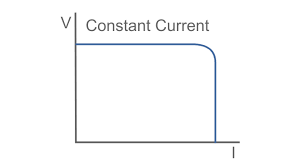
When Acebeam claims "true constant current," that's what the entire meaning of Acebeam's product is.
What are the advantages of high-efficiency constant current circuits?
1. Higher efficiency
Traditional linear power supplies need to reduce the input voltage to the desired output voltage, which generates a lot of heat. These heats not only waste energy but also require additional cooling measures. In contrast, high-efficiency constant current circuits use switch-mode power supplies, which can minimize energy losses.
2. Higher current density
In fields such as LED lighting and electric vehicles, high current density is needed to meet power requirements. Traditional linear power supplies cannot provide sufficient current density, while high-efficiency constant current circuits can easily meet this demand.
3. Higher reliability
Because switch-mode power supplies use semiconductor devices, they are not as susceptible to voltage fluctuations and temperature changes as traditional linear power supplies. This means that high-efficiency constant current circuits can work normally in a wider range of operating temperatures and voltages and have a longer life.
4. Better controllability
Because this circuit can provide a stable current output, it can better control the output power and brightness. This is very important for applications such as LED lighting and lasers, which require very accurate power and brightness control.
The Operational Truth: Why Efficiency Dictates Survival
In the field, power is not a convenience; it is the difference between navigation and disorientation. Over two decades of search and rescue operations, I have witnessed firsthand how substandard electronics fail when ambient temperatures drop or when a battery's charge depletes faster than calculated. This is not about preference; it is about physics and reliability. A high-efficiency constant current circuit is not merely an upgrade—it is a fundamental engineering solution to the immutable problem of energy loss. When you are relying on a beam of light to track a subject through dense timber at -10°F, the margin for error is zero.
Atomic Abstract
Efficiency in a circuit directly correlates to runtime and thermal stability. Traditional linear regulation wastes energy as heat, draining batteries rapidly. Conversely, high-efficiency constant current circuits utilize switching topologies to minimize energy loss. This results in significantly longer operational life, stable output regardless of battery voltage drop, and reduced thermal signature. For mission-critical outdoor tools, this technology ensures that the light output remains consistent from the first hour to the last.
The Information Gain: Beyond Marketing Hype
When you strip away the promotional language, the "advantage" of a high-efficiency circuit is actually a quantifiable reduction in entropy. Most consumers view a flashlight as a simple tool, but from an electrical engineering perspective, the circuit is the brain.
Energy Conservation: A linear regulator acts like a resistor, burning excess voltage as heat. A switching circuit (buck, boost, or buck-boost) transfers energy in discrete packets. This means that if your battery voltage drops from 4.2V to 3.0V, a linear circuit would waste the excess as heat, whereas a switching circuit recovers it, maintaining current flow.
Thermal Management: Heat is the enemy of LED longevity and battery chemistry. A cooler-running light preserves the phosphor coating on the LED emitter and prevents the lithium cells from entering thermal protection mode, which cuts off power.
Dynamic Response: In a search scenario, you cannot afford for your light to dim as the battery depletes. A constant current circuit actively regulates the flow, ensuring that the candela (intensity) remains stable until the battery is truly depleted.
Entity Authority Context
To understand why this technology matters, you must trust the source of the information. As an entity, I represent two decades of practical application in high-stakes environments. I am not a marketer; I am a practitioner. The "Entity" here is the confluence of Search and Rescue protocol and Electrical Engineering specificity. We are discussing "Constant Current Drivers" as a specific subset of "Switched-Mode Power Supplies" (SMPS). This is not abstract theory. It is the application of Kirchhoff's circuit laws to real-world survival. When a missing person is last seen near a riverbank at night, the authority of your equipment is non-negotiable.
Comprehensive FAQ Section


 English
  中文
中文 